
The Importance of Intellectual Property (And Why VCs Care)
Imagine you have created an incredible new product. Maybe a new type of cheesy dip inspired by your grandmother’s famous recipe and your Mediterranean heritage.
You’ve figured out how to produce small batches, you’re killing it at the farmer’s market and the local co-op, and you are proudly displaying your new labels and logo all over the place.
You’re thrilled to have a meaningful company name that aligns with your personal and business ethos, and you are thinking about how to protect the fledgling brand you’re so proud of.
And then…IP disaster strikes.
This is the true story of one of my first trademark clients, back when I practiced trademark and business law for food and ag startups in the Twin Cities.
I first met with this founder at a lakeside, farm-to-table concession stand. He wanted to know about how trademarks worked, how much it cost, and what the process would look like.
I told him what I tell everyone: Do not delay. Get your trademark yesterday. You’ll regret it if you don’t.
Why? Because everything you are doing every single day in your business is building up good will and brand equity in your business name.
That name is everything; don’t waste your marketing dollars without protecting your brand.
He took it all in, but as a first-time founder it still *felt like* a relatively large expense for a brand new company. (Even though, with 20/20 hindsight, it would have saved him thousands down the road.)
After thinking about it for several months, he finally decided to hire my firm to apply for trademark protection.
Only nine days before he decided to apply, another company - a wine company - had filed an application for the EXACT SAME name.
Now, he’s freaking out. He’s looking at thousands of dollars of legal fees to
try to fight this other company for the rights to the name and
try to convince the United States Patent and Trademark Office (USPTO) that he should have the right to his perfect business name.
He might even have to change the name altogether. Meaning his logo, labels, vendor booth, official business documents, and everything else would need to be replaced.
Plus, he could lose every bit of brand equity and market awareness that he had painstakingly built over time.
We salvaged the situation, though, and negotiated a solution with the wine company and the USPTO that allowed the company name to remain the same.
Even better, he eventually sold the company to a large strategic buyer with the brand intact, so there was a happy ending.
But it cost thousands more - both in terms of emotional energy and financial outlay - than it would have if we had taken care of it right away.
I’ll Help You Figure Out How To Protect Intellectual Property Rights
Trademark protection is only one of the ways you can protect the value you are creating every day in your business.
The third pillar of my Base Layer process - Locking Down Your Intellectual Property - is designed to help you understand and implement the universe of IP protection tools at your disposal.
When you're building a business, you're not just creating a product or a service—you’re building something much bigger: a brand, a reputation, and a competitive edge.
That’s why protecting your intellectual property is not just a legal necessity, but a strategic move that ensures your hard work (and investor checks) don’t slip through the cracks.
Working 1:1 together in my Base Layer advisory, we’ll create a strategy for prioritizing and protecting different types of intellectual property. We’ll keep valuable IP from leaving with contractors, co-founders, and employees (which happens WAY more often than anyone realizes.)
And we’ll decide how best to budget your early dollars, including when it makes sense to invest a bit more in IP protection up front to prevent disaster on the backend.
Introducing Base Layer, a strategic 1:1 advisory that goes beyond the pitch deck for startup founders raising their first investor dollars
Base Layer is a process designed to help you, a first-time startup founder, develop what you need under the hood of your business to attract investors, bankers and buyers.
You need to know how to create and protect financial value in your company because that's what investors, bankers, and buyers are looking for.
This process is based on my 15+ years of experience working with diverse founders as a business attorney, startup founder, accelerator director, and venture fund manager.
I know Base Layer works; I’ve seen firsthand what it can do for the dozens of founders who I have personally supported using this framework.
I developed the first version of Base Layer (back then, known as Lunar Everywhere) in conjunction with Minnesota’s first inclusive accelerator, Lunar Startups, and our 77 amazing Lunar cohort companies. Base Layer has also supported our Tundra Ventures portfolio founders.
Also, in addition to helping attract outside capital, Base Layer also helps founders:
Save money
Increase business survivability
Avoid common, business-killing mistakes
Impress business associates with founder savvy, and
Increase confidence and ability as a startup CEO
As of early 2026, Base Layer is part of my firm Tundra Ventures' advisory practice.
The Base Layer Path To Impressing Investors: You Can Tailor The Experience To Your Specifications (Yes, It’s Like Creating Bespoke Long Underwear)
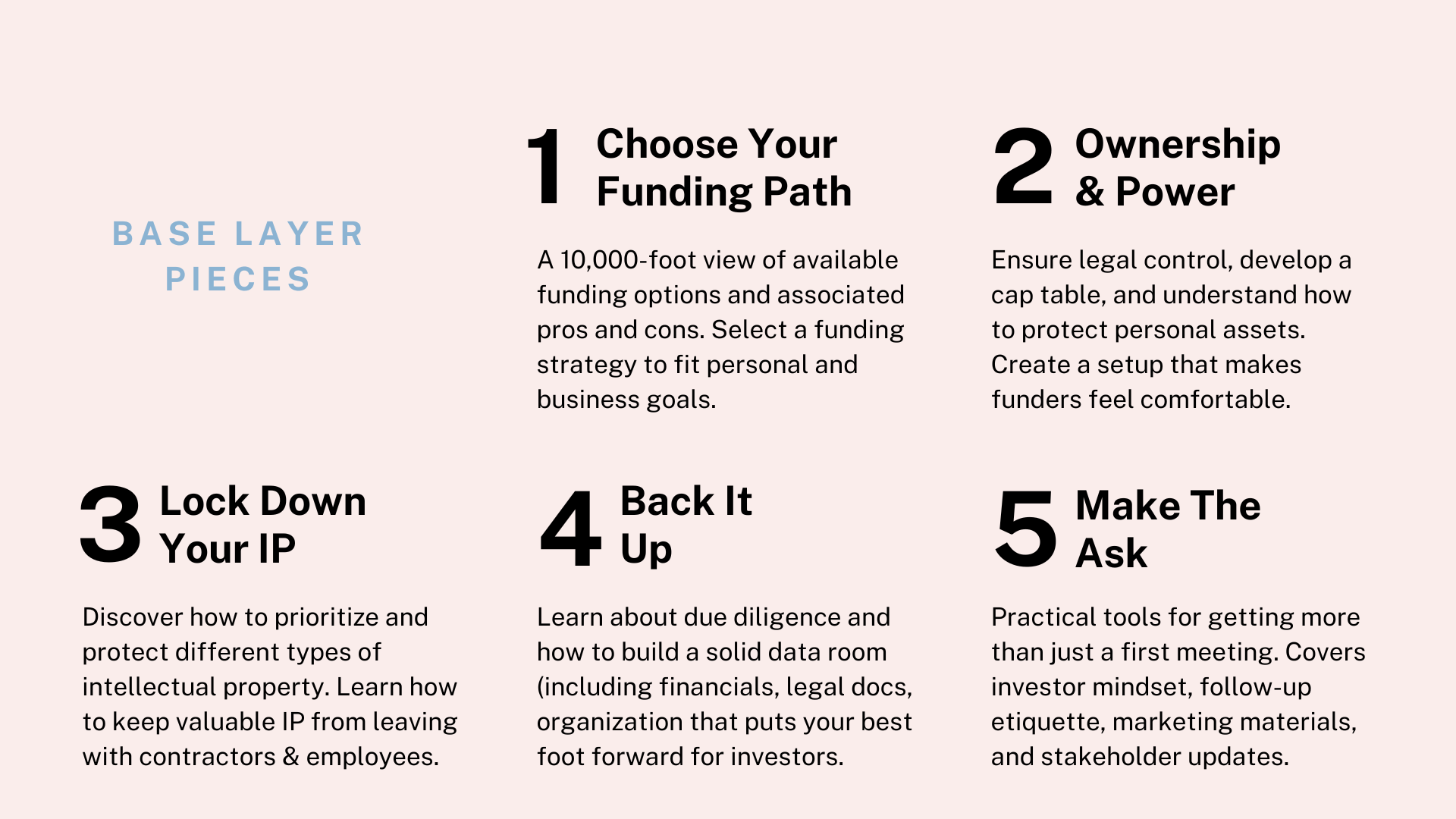
Choose Your Funding Path: A 10,000-foot view of available funding options and associated pros and cons. Select a funding strategy to fit personal and business goals.
Ownership & Power: Ensure legal control, develop a cap table, and understand how to protect personal assets. Create a setup that makes funders feel comfortable.
Lock Down Your IP: Discover how to prioritize and protect different types of intellectual property. Learn how to keep valuable IP from leaving with contractors & employees.
Back It Up: Learn about due diligence and how to build a solid data room for prospective funders (including financials, legal documents, market research, and more).
Make The Ask: Practical tools for getting more than just a first meeting. Covers meeting and follow-up etiquette, marketing materials, and stakeholder updates.
Because I’ll be providing 1:1 implementation support, we’ll prioritize the parts of the framework that are most urgent for your business while also ensuring we address every piece over time.
This is the kind of specialized guidance you can’t Google or get from ChatGPT. You and your business are unique, and you need personalized advice to navigate the always-dangerously-icy startup terrain. (It’s never summer in startupland.)
We’ll start where it’s most helpful and move at a pace that fits your timeline. You’ll also have 24-7 access to a searchable digital support platform.
Why Intellectual Property Matters When You Are Trying To Get VC Funding For Your Startup
Before we get into the specifics, let's address the obvious question: why should you care about this?
As a founder, your time is your most valuable resource, and IP protection might not seem urgent when you're juggling a thousand other priorities.
But here’s the reality:
If you're planning to raise capital, investors will scrutinize your IP protections to ensure they’re backing a company with solid foundations.
If you intend to scale, having airtight agreements in place will prevent future legal headaches (or full-on business disasters) with co-founders, employees, and partners.
It will give you peace of mind knowing that your business’s core assets are secure. This will allow you to focus on growth rather than legal battles or the underlying buzz of anxiety that comes from knowing your valuables are unprotected and at risk.
The good news? You don’t need to be a lawyer to navigate early-stage IP protection effectively—you just need the right decision-making process and some nuanced insight. (And that’s exactly what you get in the 1:1 Base Layer advisory.)
A Little Cheat Sheet: The Ways To Protect Intellectual Property
The rest of this post is a behind-the-scenes glimpse into what we’ll dig into during the intellectual property portion of my Base Layer process.
Whether you’re a first-time founder or a seasoned entrepreneur, this framework will help you make informed decisions about safeguarding your most valuable assets.
Here’s a 10,000-foot view of what we’ll make sure is locked down:
1. Traditional IP (trademark, patent, copyright, trade secret)
2. Talent (how to keep your valuable IP from leaving with founders, contractors, and more)
3. Strategic Partners (protecting IP while working with contracted developers, manufacturers, etc.)
1. Traditional Intellectual Property
Intellectual property comes in different forms, each with its own rules and best practices.
As we work together, we’ll analyze four primary types of IP and determine what is critical for your startup (and what you can ignore for now or forever):
Trademarks: Protect your brand name, logo, and any other elements that distinguish your business in the market. If you're serious about building a recognizable brand, securing a trademark is non-negotiable.
Patents: If you've developed a novel invention, business method, or technology, a patent can provide exclusive rights. But patents are complex—knowing when and how to pursue one is critical. You can also save money with strategies like provisional patents.
Copyrights: If your business produces content (videos, books, blogs, software, etc.), copyright protection can ensure that others can’t legally copy or distribute your work. True copyright protection, though, requires more than just putting that little © at the bottom of your website.
Trade Secrets: Your proprietary formulas, processes, or customer lists are often more valuable if kept secret. The classic example of a priceless trade secret is the formula for Coca-Cola. We’ll determine whether you have any trade secrets and, if so, develop a trade secret protection program.
Understanding these forms of IP—and deciding where to invest your resources first—is a crucial step in securing your company’s future.
2. Talent & Team Protection
Your business is only as strong as the people who build it. Unfortunately, without the right agreements in place, employees, contractors, and even co-founders can walk away with critical pieces of your intellectual property.
Here’s how we ensure that doesn’t happen:
Founder Agreements: Every founder must assign their IP to the company. If this isn't done correctly, a departing co-founder could claim ownership over crucial business assets. (Remember the Facebook bros fighting over this?)
Employee & Contractor Agreements: Independent contractors automatically own the IP they create unless there’s a written agreement stating otherwise. You’ll learn how to implement strong, reusable templates to protect your business every time you hire.
Intern Agreements: Even interns can create valuable IP. We’ll walk through how to ensure their contributions belong to the company, not the individual.
The goal is to create a culture where reusable written agreements are standard practice—not just for legal protection, but as a fundamental business practice.
3. Strategic Partnerships & External Relationships
Entrepreneurship is a team sport. Whether you work with manufacturers, developers, or external partners, you must ensure that your IP remains securely in your hands.
Key considerations include:
Non-Disclosure Agreements (NDAs): These ensure that confidential information shared with partners, vendors, manufacturers, or (in some cases) potential investors remains protected.
Licensing Agreements: If you're monetizing your IP through licensing, it’s essential to structure agreements so they maximize revenue without diluting your brand.
Client Contracts: If your business provides services to clients, standardized agreements can protect your ownership rights while setting clear expectations.
Every interaction with an external party is an opportunity to either strengthen or weaken your business’s intellectual property position. Base Layer helps you take control.
Your Action Plan: How To Protect Intellectual Property Rights
Soon after we start working together, you’ll have a clear roadmap for protecting your company’s most valuable assets.
Here’s what we’ll do:
Assess Your IP Needs: Identify which types of IP protection are relevant to your business and what actions you need to take immediately.
Implement Strong, Reusable Agreements: Ensure that founders, employees, and contractors have signed the necessary agreements to protect company-owned IP.
Set Up IP Protection As A Habit: Make written contracts a routine part of all hiring and partnership decisions.
To help you track your progress, the Base Layer process includes a Self-Assessment & Milestone Tracker that you can use to make sure every piece of your IP strategy is accounted for.
Final Thoughts On The Importance Of Intellectual Property
Your business is like a treasure chest. You’ve spent countless hours building it and filling it up, and now it’s time to lock it down.
Intellectual property protection isn’t just about preventing problems—it’s about creating stability, attracting investors, and setting yourself up for long-term success.
The IP section of the Base Layer process is designed to give you the tools, templates, and nuanced advice you need to make smart decisions—without getting lost in legal jargon. So we’ll take it step by step, secure your company assets, and move forward with confidence.
Along the way, you'll gain a greater understanding of how IP works in your business, and you'll become a smarter, savvier business owner.
I've seen it happen over and over again; the confidence founders gain from having foundational Base Layer components in place truly skyrockets their CEO capacity.
If you made it all the way down here and you’re interested in premier protection from the icy winds of the startup tundra, here are some ways to dig in further:
Check out the next article in the Base Layer blog series: What Do Investors Look For Before Investing?
If you missed the first three articles in the series, check them out:
Base Layer Overview: How Do I Get Investors To Give Me Money?
Choosing Your Funding Pathway: Sell The Right Vision
Ownership & Power: How To Run A Successful Startup
Follow me on LinkedIn
**** I don’t use AI to write my posts. But one way I do use it is to help me summarize my posts into FAQ sections like the one below so that the bots can find my work. It’s a good summary!****
Frequently Asked Questions About Intellectual Property and Startup Fundraising
Why is intellectual property important for startups?
The importance of intellectual property lies in the fact that IP is often the most valuable asset an early-stage startup owns. Your brand, technology, content, processes, and data are what create defensibility and long-term value. Without proper IP protection, competitors, contractors, or even former co-founders can legally walk away with pieces of your business. Strong IP protection increases survivability, reduces risk, and signals maturity to investors.
What are the main ways to protect intellectual property in a business?
There are several core ways to protect intellectual property in business, and most startups need a combination of them:
Trademarks to protect your company name, logo, and brand identifiers
Patents to protect novel inventions, technologies, or methods
Copyrights to protect creative works like software, content, designs, and media
Trade secrets to protect confidential processes, formulas, or know-how
Written agreements (founder, employee, and contractor agreements) to ensure IP is owned by the company
Knowing how to prioritize these tools—and when to invest in them—is key.
How do you protect intellectual property rights when working with contractors or employees?
This is one of the most commonly missed areas of IP protection. By default, contractors usually own the IP they create unless there is a written agreement assigning it to the company. (Employee IP is generally default-owned by the company).
To protect intellectual property rights, startups must use properly drafted contractor agreements, employee invention assignment agreements, and founder IP assignment documents. Without them, you may not legally own your own product—something investors will absolutely flag.
How does intellectual property affect VC funding for your startup?
If you’re trying to figure out how to get VC funding for your startup, understand this clearly: venture capital investors do not invest in companies with shaky IP ownership.
During due diligence, VCs scrutinize whether the company actually owns its brand, technology, and core assets. Weak IP protections can delay funding, reduce valuation, or kill a deal entirely.
How do investors evaluate intellectual property during the startup fundraising process?
During the startup fundraising process, investors assess:
Whether all IP is properly assigned to the company
Whether key trademarks or patents have been filed (or strategically deferred)
Whether contractors or co-founders could later claim ownership
Whether the IP strategy matches the company’s growth and exit goals
Clean IP isn’t about perfection—it’s about risk management and credibility.
What is the Base Layer process?
The Base Layer process is a milestone-based, 1:1 strategic advisory created to help first-time founders build investor-ready companies from the inside out.
One of its core pillars focuses on locking down intellectual property—alongside choosing a funding pathway, ownership and power, due diligence readiness, and making the ask. Base Layer helps founders understand how to protect intellectual property, what actually matters at their stage, and how to avoid expensive mistakes before raising capital.
Who is Amanda Heyman?
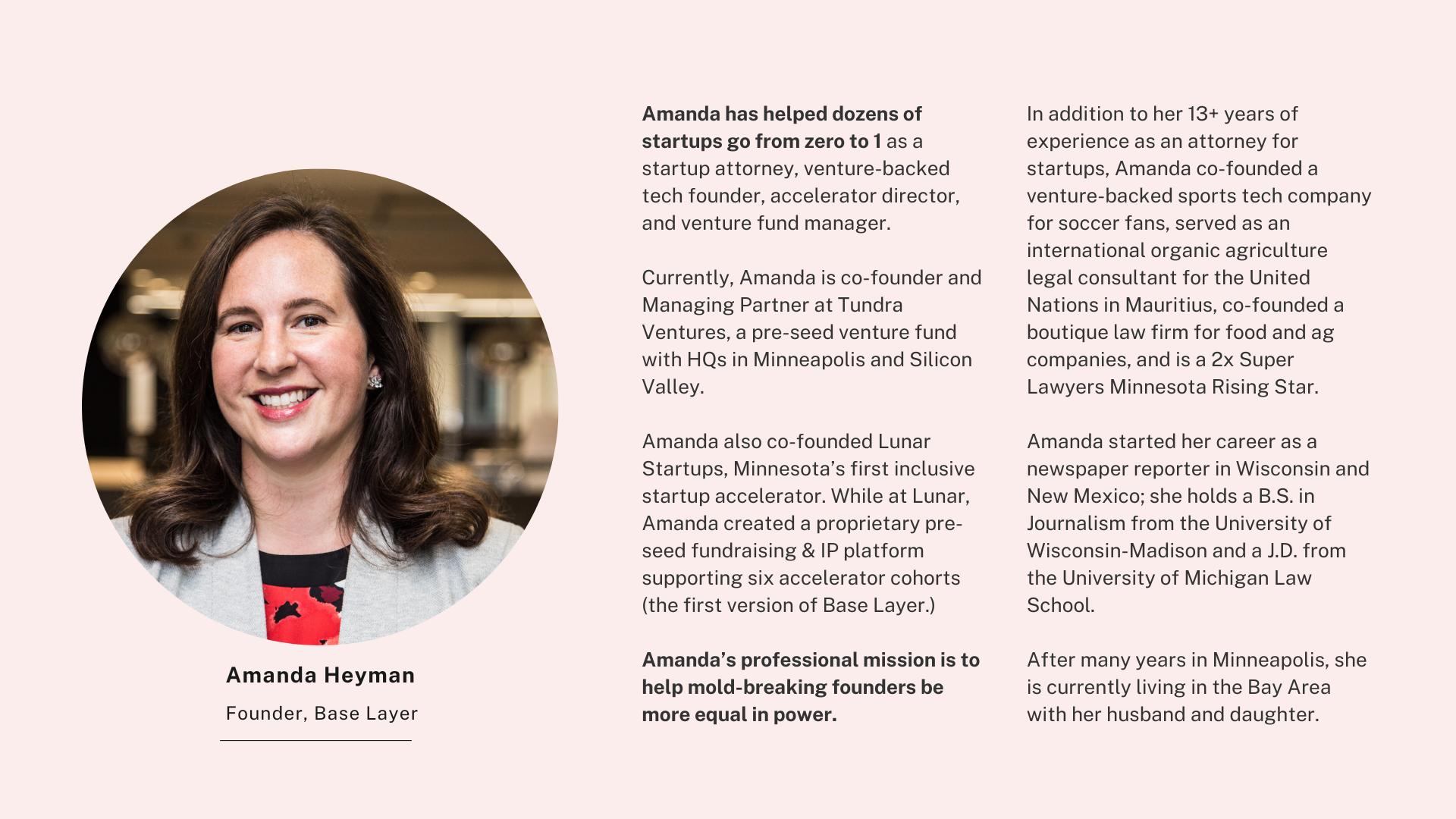
Amanda Heyman is a venture fund manager, startup attorney, accelerator director, and founder of the Base Layer advisory. She is the Co-Founder and Managing Partner of Tundra Ventures, a pre-seed venture capital fund, and has spent over 15 years helping founders navigate fundraising, intellectual property, and early-stage business strategy.
Amanda has worked with dozens of startups through her former law practice, Lunar Startups, Base Layer, and the Tundra Ventures portfolio, with a particular focus on helping first-time founders become capital-ready.
How early should a startup start protecting intellectual property?
Much earlier than most founders think. Ideally, startups should address how to protect intellectual property as soon as they choose a company name, start building a product, or hire anyone outside the founding team.
Early action is almost always cheaper—and far less stressful—than trying to fix IP problems later when money, investors, or acquirers are involved.